
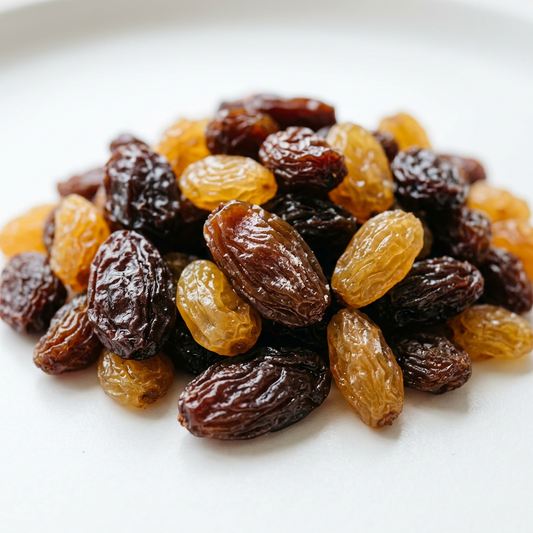
Raisins are small, naturally sweet dried grapes that make a convenient snack and a versatile ingredient for everyday meals. They can be added to breakfast cereals, oatmeal, baked goods, rice dishes, salads, and desserts. Available in black, brown, and golden varieties, raisins offer natural sweetness along with fibre, potassium, and antioxidants.
Although raisins are nutritious, their concentrated natural sugars and calories make portion size important. Understanding the different varieties, their nutritional value, and the best ways to enjoy them can help you make informed choices for yourself and your family.
Which Country's Raisins Are Best?
There is no single country that produces the best raisins for everyone. Quality depends on the grape variety, growing conditions, drying process, freshness, and intended use.
Some well-known raisin-producing regions include:
- Turkey: Known for its seedless sultana raisins, which are popular in baking and snacking.
- Iran: Produces several varieties of kishmish, including light-coloured and dark raisins.
- India: Offers raisins in different sizes and colours, commonly used in sweets, snacks, and traditional dishes.
- United States: California is known for producing seedless raisins suitable for cereals, baking, and everyday consumption.
- South Africa: Produces raisins with a range of colours and flavour profiles.
When choosing raisins, look for a fresh aroma, a clean appearance, and a soft, chewy texture. The best option is the one that suits your taste, recipe, and budget.
Raisins: What Are They and Why Are They Popular?
Raisins are produced by drying grapes until much of their water content evaporates. This process concentrates their natural sugars, giving them a sweet flavour and chewy texture.
They are popular because they have a long shelf life when stored properly, are easy to carry, and can be used in sweet and savoury recipes. Raisins also provide dietary fibre, potassium, and small amounts of iron and other essential nutrients.
Whether eaten on their own or mixed into meals, raisins are a simple way to add sweetness and texture to your diet.
Are Kishmish and Raisins the Same?
Yes, kishmish and raisins generally refer to the same food: dried grapes. The word kishmish is commonly used in South Asian languages, including Urdu and Hindi, while raisins is the English term.
However, kishmish may refer to particular varieties of dried grapes depending on the region. Some varieties are small and dark, while others are larger, lighter in colour, and seedless.
Both can be enjoyed as snacks or added to desserts, breakfast dishes, and traditional recipes. When buying kishmish, check the packaging for the variety, ingredients, and whether added sugar or oil has been used.
Are Raisins High in Sugar?
Yes, raisins contain relatively high amounts of natural sugar because drying removes water and concentrates the sugars already present in grapes.
A 30-gram serving of raisins typically contains around 18 grams of sugar and approximately 90 calories, although the exact values vary by variety and brand.
Despite their sugar content, raisins also provide fibre and useful nutrients. They can fit into a balanced diet when eaten in moderate portions.
To manage sugar intake:
- Measure a small portion rather than eating directly from the packet.
- Combine raisins with unsalted nuts or seeds for a more balanced snack.
- Choose products without added sugar.
- Consider your overall carbohydrate intake if you have diabetes.
What Is the Best Way to Eat Raisins?
Raisins can be enjoyed in several ways, depending on your preferences and nutritional goals.
Here are some easy ideas:
- As a snack: Eat a small handful between meals.
- With breakfast: Add raisins to oatmeal, porridge, or unsweetened cereal.
- With nuts: Combine raisins with almonds, walnuts, or pumpkin seeds.
- In cooking: Mix them into rice dishes, salads, or vegetable-based recipes.
- In baking: Use raisins in muffins, bread, biscuits, and homemade energy bites.
- Soaked in water: Soaking raisins overnight softens them and may make them easier to chew.
Soaking does not remove most of the sugar or automatically make raisins healthier. If you soak them, you can eat the raisins and drink the water if desired, while remembering that their natural sugars remain part of your intake.
Are Kishmish Raisins Hot or Cold?
In traditional South Asian food practices, kishmish is sometimes described as having a warming or cooling effect on the body. These classifications are based on traditional beliefs rather than established scientific evidence.
From a nutritional perspective, raisins do not have a proven special effect on body temperature. Their main benefits come from their fibre, minerals, and other naturally occurring compounds.
You can generally enjoy raisins at room temperature or soaked in water according to your preference. If a particular food causes digestive discomfort, adjust your portion or preparation method.
Are Raisins Better Than Grapes?
Both raisins and fresh grapes can be nutritious choices, but they offer different advantages.
Fresh grapes contain more water and fewer calories per gram. Raisins are more concentrated, so a small portion provides more energy, sugar, and fibre than the same weight of fresh grapes.
Choose fresh grapes when you want a hydrating, lower-calorie snack by weight. Choose raisins when you need a portable snack or a concentrated source of sweetness for recipes.
Neither is universally better. Including both in a varied diet can help you enjoy their different textures and nutritional benefits.
Can a Person With Type 2 Diabetes Eat Raisins?
People with type 2 diabetes can often eat raisins in moderation, but portion size and overall carbohydrate intake are important.
Raisins contain natural sugars and carbohydrates that can raise blood glucose levels. Their fibre content does not eliminate this effect.
For better portion control:
- Start with a small serving, such as one tablespoon, and assess how it fits into your meal plan.
- Pair raisins with protein or healthy fats, such as plain yoghurt or a small serving of nuts.
- Avoid products with added sugar.
- Monitor your blood glucose response if recommended by your healthcare professional.
Individual responses vary. If you take glucose-lowering medication or follow a specific carbohydrate target, consult your healthcare professional or registered dietitian for personalised guidance.
Are Raisins Good for Kids?
Yes, raisins can be a nutritious snack for children because they provide energy, fibre, and several minerals. Their natural sweetness can also make them a useful alternative to some heavily sweetened snacks.
However, raisins are sticky and can cling to teeth, potentially contributing to tooth decay when oral hygiene is poor. Offer them as part of meals or planned snacks, encourage water after eating, and maintain regular brushing with fluoride toothpaste.
For young children, preparation and supervision matter. Whole raisins can pose a choking risk, particularly for children under four. Avoid offering whole raisins to children who are not developmentally ready to chew them safely. For younger children, follow age-appropriate feeding guidance and consider suitable alternatives.
Is Eating 20 Raisins Too Much?
For most healthy adults, eating 20 raisins is generally a reasonable amount. Depending on their size, this may provide roughly 25–35 calories, although the actual amount can vary.
The more important consideration is your total intake throughout the day. A few raisins added to breakfast or eaten as a snack can fit comfortably into a balanced diet.
If you have diabetes, need to manage your calorie intake, or experience digestive discomfort, consider measuring your portion rather than relying on the number of raisins.
Which Raisin Is Better: Black or Brown?
Black and brown raisins can both be nutritious. Their differences largely depend on the grape variety and drying or processing method.
Black raisins are typically dark, sweet, and chewy. They work well in snacks, desserts, and traditional dishes.
Brown raisins are often made from light-coloured grape varieties that darken during drying. They are commonly used in baking, cereals, and everyday cooking.
Some darker varieties may contain different levels of certain plant compounds, but colour alone does not establish which raisin is healthier. Compare freshness, ingredients, taste, and price when choosing between them.
Do Raisins Expire?
Yes, raisins can eventually spoil, although properly stored raisins generally keep well for a considerable time.
For best quality, store unopened packages according to the label. Once opened, keep raisins in an airtight container in a cool, dry place away from direct sunlight. Refrigeration can help preserve quality in warm or humid conditions.
Discard raisins if you notice mould, an unusual smell, signs of moisture contamination, or an unexpected change in appearance. Raisins that have become dry or hard may have lost quality without necessarily being unsafe, but check them carefully before eating.
Always follow the manufacturer's best-before or use-by guidance where applicable.
Do Raisins Help With Sleep?
Raisins are sometimes included in bedtime snacks because they contain small amounts of nutrients involved in normal bodily functions. However, there is limited evidence that eating raisins directly improves sleep or treats insomnia.
If you feel hungry before bed, a small serving of raisins with a source of protein may make a convenient snack. Avoid eating large quantities immediately before sleeping, particularly if they cause bloating or digestive discomfort.
For better sleep, focus on a consistent bedtime, limiting caffeine later in the day, and maintaining a comfortable sleeping environment rather than relying on a particular food.
Can Eating Too Many Raisins Be Bad?
Yes, eating excessive amounts of raisins can cause problems for some people.
Potential concerns include:
- Excess calorie intake: Their concentrated energy can add up quickly.
- High sugar intake: Large portions provide substantial amounts of carbohydrates.
- Digestive discomfort: Their fibre and natural sugars may cause gas, bloating, or diarrhoea in sensitive individuals.
- Dental health concerns: Their sticky texture allows them to cling to teeth.
Most people can enjoy raisins safely as part of a varied diet. Eating a measured portion, drinking enough water, and maintaining good dental hygiene can help reduce these concerns.