
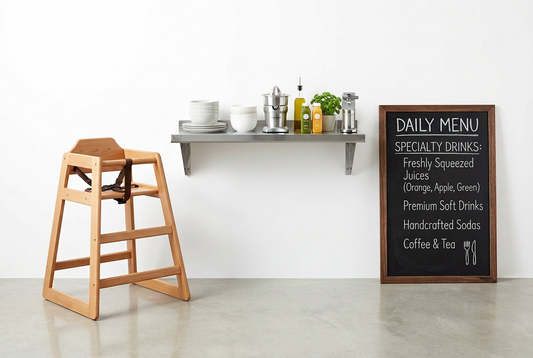
Restaurant furniture plays an important role in creating a comfortable dining experience, improving kitchen organization, and making the most of available space. From sturdy dining tables and chairs to heavy-duty wall shelves and eye-catching menu boards, the right choices can help restaurants operate more efficiently while maintaining an inviting atmosphere.
Whether you are opening a new restaurant, renovating an existing space, or upgrading your kitchen, understanding your furniture options can make purchasing decisions easier. This guide covers where restaurants source their furniture, practical menu display ideas, shelving recommendations, and high chair considerations for families dining with young children.
Restaurant Furniture: Choosing the Right Pieces for Your Business
Restaurant furniture needs to balance durability, comfort, functionality, and appearance. Unlike typical household furniture, commercial furniture must withstand frequent use, regular cleaning, and the demands of a busy dining environment.
Popular restaurant furniture options include:
- Dining tables: Available in wood, metal, laminate, and other durable materials.
- Dining chairs and stools: Designed for comfort, stability, and efficient seating arrangements.
- Booths and banquettes: Useful for maximizing seating while creating a more private dining experience.
- Bar tables and counter stools: Suitable for cafés, bars, and casual dining spaces.
- Storage shelves and cabinets: Help keep ingredients, dishes, utensils, and supplies organized.
- High chairs and booster seats: Make dining more accessible for families with young children. Here are a few options for you to choose from.
When selecting furniture, consider your restaurant's available space, customer base, interior design, and maintenance requirements. Commercial-grade materials are often a worthwhile investment because they are built to handle heavier use than many residential alternatives.
What Is a Chalkboard Menu?
A chalkboard menu is a menu displayed on a board with a dark writing surface that allows staff to write or draw information using chalk or chalk markers. Restaurants commonly use these boards to display food items, prices, daily specials, and seasonal drinks.
Chalkboard menu like this one is particularly popular in cafés, bakeries, food trucks, and casual dining establishments because they are easy to update and can complement rustic, industrial, or contemporary interiors.
They are available in several formats, including wall-mounted boards, freestanding signs, countertop displays, and large framed panels.
For a professional appearance, use clear lettering, organize items into sections, and keep prices easy to find. If the menu changes frequently, a smooth surface compatible with erasable chalk markers can make updates simpler. Always confirm the manufacturer's cleaning instructions before using liquid chalk markers.
What Are Some Wall Shelves That Can Hold a Lot of Weight?
Heavy-duty wall shelves are useful for restaurant kitchens, pantries, storage rooms, and service areas. However, their load capacity depends on the shelf material, bracket design, wall construction, fasteners, and installation quality.
Common options include:
- Stainless steel shelves: Suitable for many commercial kitchen environments because they are durable, easy to clean, and resistant to corrosion when the appropriate grade is selected.
- Heavy-duty steel bracket shelves: Offer strong support when installed with suitable brackets and properly rated fasteners.
- Commercial wire shelving: Provides airflow and visibility, making it useful for dry storage and some pantry applications.
- Reinforced wooden shelves: Can support substantial loads when appropriately designed, supported, and protected from moisture.
- Industrial wall-mounted shelving: Often features reinforced brackets and robust construction for demanding storage needs.
For heavy items such as bulk ingredients, cookware, and equipment, verify the manufacturer's stated load rating. Check whether that rating applies to the entire shelf or to each bracket, and whether it assumes evenly distributed weight.
Always secure shelves to suitable structural supports. Do not assume that ordinary drywall anchors can safely hold heavy commercial supplies.
Where Do Restaurants Get Their Furniture From?
Restaurants typically purchase furniture from commercial furniture suppliers, restaurant equipment distributors, wholesale retailers, and specialized manufacturers. The best option depends on the restaurant's budget, design requirements, and quantity needs.
Common purchasing options include:
- Commercial furniture suppliers: Offer restaurant tables, chairs, booths, and stools designed for frequent use.
- Restaurant supply stores: Often carry furniture alongside kitchen equipment, storage solutions, and dining accessories.
- Wholesale distributors: Can be useful for purchasing larger quantities for new restaurants or multiple locations.
- Furniture manufacturers: May provide custom dimensions, upholstery, finishes, and branding options.
- Online retailers: Make it easier to compare styles, specifications, and prices.
- Second-hand furniture dealers: Offer opportunities to reduce initial costs, provided the furniture is safe and in good condition.
Before buying, check weight limits, dimensions, warranty coverage, replacement-part availability, and cleaning instructions. Ordering samples or inspecting furniture in person can also help you assess its quality.
What Are Some Ideas for a Simple Menu Display Board?
A simple menu display board should be readable, easy to update, and consistent with your restaurant's branding. The best design depends on whether customers order at a counter, sit at tables, or browse a menu before entering.
Consider these practical ideas:
- Framed chalkboard: Ideal for daily specials, handwritten menus, and seasonal offerings.
- Letter board: Uses removable letters to create a neat, changeable display.
- Printed menu board: Works well for fixed menus and can feature consistent typography and branding.
- Magnetic menu board: Allows staff to rearrange magnetic letters, cards, or menu sections.
- Acrylic display board: Offers a clean, modern appearance and can be mounted on a wall.
- Digital menu screen: Makes it possible to update prices, promotions, and menu items remotely, depending on the system.
- Countertop menu stand: Provides a compact display for drinks, desserts, or featured products.
Keep the layout simple by grouping items into categories such as starters, mains, desserts, and beverages. Use contrasting colours, readable fonts, and concise descriptions. Avoid overcrowding the board with too many items or decorative elements.
What Is the Recommended Height for Wall-Mounted Shelves?
The recommended height depends on what the shelves will hold and who needs to access them.
For general storage, shelves are often positioned approximately 1.2 to 1.5 metres above the floor when regular access is important. Higher shelves can be used for lightweight items that are accessed less frequently.
In restaurant kitchens, placement should account for work surfaces, appliances, cleaning requirements, and food safety practices. Shelves above counters must leave enough room for food preparation and equipment use without creating a hazard.
For comfortable access:
- Keep frequently used items within easy reach.
- Place heavy items on lower shelves.
- Avoid positioning storage where staff must reach over hot equipment.
- Follow applicable building, fire, sanitation, and workplace safety requirements.
There is no single height that suits every installation. Measure the space and consider the height of the people who will use the shelves.
Are Floating Shelves Out of Style in 2026?
No. Floating shelves remain a versatile interior design choice in 2026, particularly in modern cafés, restaurants, and compact dining spaces. Their appeal comes from their clean appearance and ability to provide storage without bulky visible brackets.
Floating shelves can display decorative objects, packaged products, coffee accessories, small plants, or lightweight serving items. Wood finishes can create warmth, while metal and minimalist finishes complement contemporary interiors.
For restaurant use, practicality matters as much as appearance. Decorative floating shelves should not be confused with heavy-duty storage systems. If you intend to store large quantities of dishes, ingredients, or equipment, choose a product specifically rated for the intended load and install it into suitable structural supports.
The key is to select shelves that complement your interior while meeting your storage and safety requirements.
What Is a Kitchen Shelf Called?
A kitchen shelf can have different names depending on its design and purpose.
Common terms include:
- Wall shelf: A general shelf attached directly to a wall.
- Floating shelf: A shelf with concealed supports that create a seamless appearance.
- Pot rack shelf: A storage unit designed for cookware, sometimes with hanging hooks.
- Pantry shelf: A shelf used to store ingredients, packaged foods, and kitchen supplies.
- Wire shelving: An open-grid storage system commonly used in commercial kitchens and storerooms.
- Dunnage rack: A raised, heavy-duty platform used to store bulky items off the floor.
- Stainless steel shelving: A durable storage option frequently used in commercial food preparation areas.
When shopping for restaurant supplies, use the intended application and required load capacity to narrow your options.
How Far Apart Should Shelves Be on a Wall?
The ideal spacing depends on the height of the items being stored. A useful starting point is approximately 25 to 35 centimetres between shelves for general household or small-item storage. Larger kitchen supplies may require more vertical clearance.
Consider these approximate guidelines:
- Cups and small containers: 20–30 cm
- Plates and bowls: 25–35 cm
- Tall bottles and packaged ingredients: 30–40 cm
- Large kitchen equipment: Measure the equipment and allow additional clearance for easy removal.
These are planning guidelines rather than universal standards. Measure the tallest items you intend to store before installing the shelves.
Also consider the shelf depth, bracket placement, wall strength, and accessibility. Avoid spacing shelves so closely that staff cannot safely remove items or clean the surfaces.
What Age Should a Child Use a High Chair at a Restaurant?
Many children begin using a high chair when they can sit upright with good head and neck control, often around six months of age. However, readiness varies, and the specific high chair's age, size, and weight requirements should always be followed.
Restaurant high chairs help position young children at table height and keep them more securely seated during meals. Before use, inspect the chair for damage, check its stability, and secure the child with the available restraint system.
Never leave a child unattended in a high chair. Avoid placing the chair close to hot drinks, serving stations, or other hazards.
If a restaurant does not have a suitable high chair, parents can ask staff about available seating alternatives.
Can I Bring My Own High Chair to a Restaurant?
In many cases, parents can bring their own portable high chair or travel booster, but permission depends on the restaurant's policies and available space.
A compact, portable option can be helpful when travelling with a baby or toddler, particularly if the restaurant has limited child seating. However, some establishments may restrict personal seating equipment because of space limitations, accessibility requirements, or safety concerns.
Before visiting, contact the restaurant to confirm whether your equipment is permitted. Choose a product suitable for your child's age and size, and follow the manufacturer's installation instructions.
A portable high chair should be stable, compatible with its intended seating surface, and used only as directed. Never place a child in an unsecured seat or on an unstable table.
Should a 3-Year-Old Still Use a High Chair?
Some three-year-olds may still benefit from a high chair, especially if they have difficulty remaining seated safely or need additional support. However, many children this age can transition to a regular chair with a suitable booster seat.
The decision should depend on the child's height, development, comfort, and ability to sit safely at the table rather than age alone.
A booster seat may be a practical alternative because it raises the child to a more comfortable dining height while allowing them to participate in family meals.
Parents should ensure that the seat is stable, appropriately secured, and used according to the manufacturer's guidance. If a child repeatedly climbs out of a high chair or no longer fits comfortably, consider an appropriate alternative.