
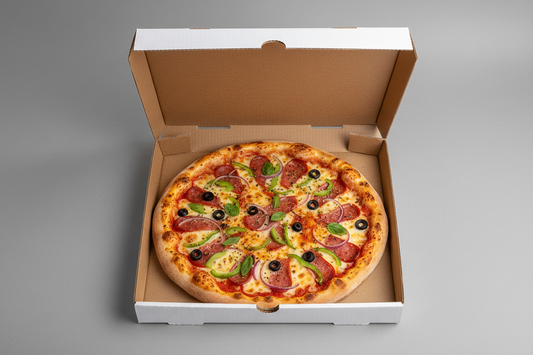
Pizza night is a staple in many households — from Friday evenings with friends to quick meals after long winter days. But while we think a lot about toppings, cheese stretch, and crust styles, we rarely think about one of the most important parts of the pizza experience: the pizza box.
This guide breaks down everything people want to know about pizza boxes — recycling, safety, design choices, and the iconic “little plastic table.”
What is the purpose of a pizza box?
A pizza box is designed to keep pizza hot, intact, and easy to transport. Whether it’s coming from a local pizzeria or a national chain, the goal is to maintain structure, temperature, and freshness.
A good pizza box:
· Protects the pizza from getting squished
· Traps heat while allowing some steam to escape
· Prevents cheese and toppings from sliding
· Makes transport cleaner and more convenient
In short, it’s a functional, insulated container built for safe delivery and takeaway.
Here we have some of the best pizza boxes:
Why do pizza boxes have little tables?
Those tiny plastic stands — often called pizza savers or pizza support — were invented for a simple reason:
To stop the lid from collapsing and touching the cheese.
Without it, steam can soften the cardboard, which might sag and stick to your toppings.
Can takeaway pizza boxes be recycled?
Yes — but with conditions. The problem? Pizza boxes often contain grease, cheese, sauce stains, and crumbs.
General rule:
· Top lid (clean side): Usually recyclable
· Bottom greasy half: Often not recyclable
Tip:
Tear the clean parts and recycle them; toss the greasy parts into the garbage or compost (depending on your city’s rules).
Why does pizza come in a cardboard box?
Cardboard hits the sweet spot of:
· Being affordable
· Lightweight
· Heat-retaining
· Biodegradable
Strong enough not to collapse under a hot, oily pizza
It also absorbs a small amount of moisture, preventing the pizza from becoming too soggy during transport.
Why is pizza kept in a square box?
It comes down to efficiency and cost.
Square boxes:
· Are easier and cheaper to manufacture
· Stack neatly in restaurants
· Ship flat for storage
· Are easier for employees to fold quickly
· Provide extra air space for heat circulation
The extra corners also prevent cheese and toppings from smearing against the sides during delivery.
Are you supposed to take the pizza off the cardboard?
Most pizzas have a circular cardboard liner under them. Its purpose is to:
· Absorb excess oil
· Prevent the pizza from sticking to the box
· Make serving easier
You can remove the pizza from it, but you don’t need to. It is food-safe and designed to tolerate heat and moisture.
Why do pizza boxes have holes in them?
Ventilation holes help:
· Release steam
· Prevent sogginess
· Maintain crust crispiness
· Reduce condensation
A soggy pizza = unhappy customer. Vent holes keep the airflow balanced.
Why do pizzas come in cardboard boxes?
Because cardboard is the best mix of cost efficiency, insulation, and sustainability. Alternatives like plastic or metal are too expensive, not eco-friendly, or unsafe for delivering hot food.
Is it bad to leave pizza in the box?
Not immediately — but not ideal long-term.
Short-term (1–2 hours):
✔ Completely fine.
Overnight:
✘ Not recommended.
Pizza boxes can trap moisture, increasing bacterial growth. If you’ll eat leftovers later, store them in an airtight container.
Is it okay to put a pizza box in the oven at 170 degrees?
At 170°F (around 77°C), it might be safe for a few minutes, but it isn’t recommended.
Risks include:
· Cardboard drying out and becoming flammable
· Ink potentially releasing fumes
· Glue softening
Many people use the oven to keep pizza warm, but it’s safer to transfer the pizza to a baking sheet.
Can a pizza box go in the oven at 350 degrees?
Absolutely not.
At 350°F (177°C), cardboard can ignite. This is a fire hazard and unsafe for food.
Never put a full pizza box in an oven above low-warming levels.
Who invented the little plastic table in pizza boxes?
The pizza saver was patented in 1985 by Carmela Vitale, an American woman from New York. Although it seems like a simple invention, it solved a huge problem for pizzerias worldwide.
What is the plastic table in a pizza box called?
It’s commonly known as:
· Pizza saver
· Pizza table
· Box tent
Its job is simple: protect your cheese masterpiece from collapsing cardboard.
Why don't pizzas come in round boxes?
Round boxes:
· Are expensive to produce
· Don’t stack well
· Can’t be shipped flat
· Require more material than square boxes
· Are harder for staff to fold quickly
Square boxes are simply more practical and cost-effective.
What to do with an empty pizza box?
Plenty of eco-friendly and creative uses:
1. Recycle the clean part
Cut off the grease-free lid.
2. Compost the greasy part
3. Use as a drip tray under an indoor plant
4. Cut into craft material for kids
5. Save as a makeshift serving tray
You might need multiple layers to make it strong enough.
6. Use in moving/packing as cushioning
Why do people put pizza boxes in the oven?
Most people do it to keep the pizza warm. If they’re hosting, the oven acts like a warming drawer.
However, this habit can be risky:
· Boxes can dry and ignite
· Ink can heat up
· Odours may spread
Safer alternative:
Remove the pizza and place it on a baking sheet or pizza stone.