
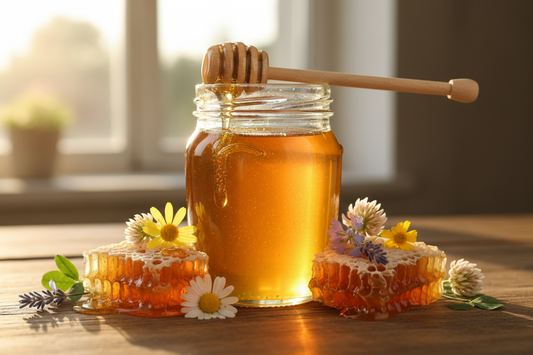
Honey has been cherished for thousands of years—not just as a natural sweetener, but as a cultural symbol, a healing ingredient, and a pantry essential. Whether you drizzle it on toast, stir it into warm tea, or enjoy it straight off the spoon, there’s something timeless and irresistible about this golden nectar. In this guide, we’ll explore the fascinating facts, the science, and the frequently asked questions people often ask about honey.
Is honey in coffee better than sugar?
From a nutritional standpoint, honey in coffee can be better than sugar, but it depends on your goals. Honey contains trace minerals, antioxidants, and enzymes, while refined sugar is essentially empty calories. Honey also has a deeper flavour profile, which can enhance your coffee. However, honey is still a form of sugar, so use it in moderation—especially if you’re watching your overall sugar intake. Here are the best options we have:
What is the best container for honey?
The best container for honey is an airtight, non-reactive container like food-grade plastic or glass jars just like this one. Glass keeps honey fresh, prevents odours from seeping in, and makes it easy to warm up gently when it crystallizes. Avoid metal containers, as honey’s natural acidity can cause corrosion over time.
Should I throw out expired honey?
In most cases, you do not need to throw out expired honey. Honey doesn’t spoil, but it can crystallize or darken over time. This is a natural process and not a sign of expiration. Simply warm the jar in a bowl of hot (not boiling) water to re-liquefy it. As long as the honey hasn’t been contaminated with water or food particles, it’s still safe.
Can you eat 2000 year old honey?
Surprisingly, yes—technically you can eat 2,000-year-old honey. Archaeologists have discovered jars of honey in ancient Egyptian tombs that were still perfectly edible. Honey has an exceptionally long shelf life thanks to its low moisture content, natural acidity, and hydrogen peroxide–producing enzymes, all of which prevent spoilage. So if honey lasts millennia, it’s no wonder your kitchen jar stays safe for years.
Can honey expire?
Technically, honey does not expire. What’s printed as an “expiry date” is more about quality than safety. Over time, honey may crystallize or darken, but these changes don’t make it unsafe. Just warm it gently and it returns to its original smooth texture.
What is the rarest colour of honey?
While most people are familiar with golden or amber honey, the rarest colour of honey in the world is purple. Found in small pockets of the United States, this naturally purple honey is extremely limited and not fully understood. Some believe the colour comes from specific floral sources, while others think it’s caused by environmental or bee-related factors. Either way, it’s a collector’s delight.
Can bacteria grow in honey?
Normally, bacteria cannot grow in honey. Its water content is too low, and its acidity too high, for harmful microbes to multiply. However, raw honey can contain botulinum spores, which is why babies under one year should never consume it. For older children and adults, honey is generally very safe.
Why does honey taste so nice?
Honey tastes so nice because of its complex blend of sugars, floral compounds, and natural acids. The flavour depends on what flowers the bees visit, which is why clover, buckwheat, orange blossom, wildflower, and manuka honey all taste different. Honey contains more than 200 natural compounds, many of which contribute to its aroma and flavour.
Why do I like honey so much?
If you feel like you’re a little obsessed with honey, you’re not alone. Humans are naturally drawn to sweetness, and honey delivers satisfying sweetness with a depth of flavour that white sugar simply can't match. Additionally, honey contains aromas and antioxidants that enhance the sensory experience, making it especially enjoyable.
Is there a downside to eating honey?
While honey offers many health benefits, there are downsides to be aware of:
· It's still high in sugar and calories.
· Overconsumption can affect blood sugar levels.
· Not suitable for infants under 1 year.
· Some people may experience allergic reactions to pollen content.
Moderation is key.
Should honey be refrigerated?
Honey should not be refrigerated. Cold temperatures speed up crystallization, making honey grainy and harder to use. At room temperature—ideally between 18°C and 24°C—honey stays smooth and spreadable.
What cannot be mixed with honey?
Honey should not be mixed with:
· Very hot water or boiling liquids (can destroy beneficial enzymes)
· Certain herbal or Ayurvedic ingredients that react poorly when heated
· Fermenting foods unless intended, as yeast and water can cause fermentation
In general, keep honey away from excess moisture.
Does honey help sleep?
Yes, honey can help with sleep. A teaspoon before bed may support melatonin production by stabilising blood sugar and promoting the release of tryptophan. Many people enjoy honey in warm milk or herbal tea as a natural bedtime remedy.
Can we drink water after eating honey?
Yes, you can drink water after eating honey without any issues. In fact, mixing honey with warm water is a popular morning routine for digestion and hydration.
Is honey actually healthier than sugar?
Overall, honey is indeed healthier than sugar. Honey has:
· antioxidants
· trace minerals
· antibacterial properties
· a lower glycaemic index
However, honey is still a sugar and should be used moderately. It’s healthier than refined sugar, but not a free pass for unlimited consumption.