
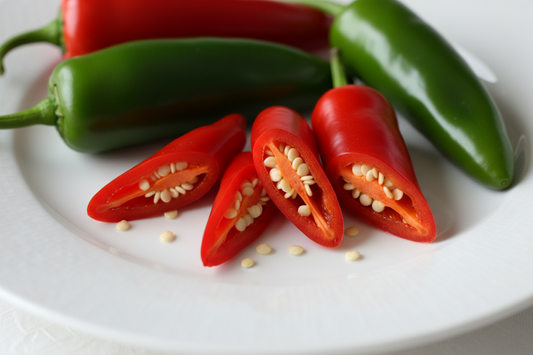
Jalapenos are one of the world's most popular chilli peppers, loved for their mild-to-medium heat, fresh flavour, and versatility in cooking. Whether they're sliced onto nachos, blended into sauces, stuffed with cheese, or pickled for sandwiches, jalapenos add just the right amount of spice without overwhelming most people.
Many home cooks also enjoy growing jalapenos because they are relatively easy to cultivate and produce generous harvests. Beyond their flavour, jalapenos contain vitamins, antioxidants, and plant compounds that may offer health benefits when enjoyed as part of a balanced diet.
If you've ever wondered whether a jalapeno is simply another type of chilli or had questions about storing, eating, or preparing them, this guide answers the most common questions.
Do Jalapeno last longer in the fridge or on the counter?
Fresh jalapenos last significantly longer in the refrigerator.
Typical storage times:
|
Storage Method |
Approximate Freshness |
|
Counter |
3–5 days |
|
Refrigerator |
1–2 weeks |
|
Frozen |
Up to 12 months |
For best results:
- Store them dry.
- Place them in a breathable produce bag.
- Avoid washing until you're ready to use them.
Moisture speeds up spoilage, so keeping peppers dry helps them stay fresh longer.
Or buy in a tin pack like this one so you don’t have to care much for it.
Is a Jalapeno just a chilli?
Yes. A jalapeno is a type of chilli pepper. It belongs to the Capsicum annuum species, which also includes bell peppers, cayenne peppers, serrano peppers, and many other varieties.
What makes jalapenos unique is their balance of heat and flavour. They typically measure between 2,500 and 8,000 Scoville Heat Units (SHU), making them noticeably spicy but still approachable for many people.
Compared with other peppers:
- Bell peppers: 0 SHU
- Jalapenos: 2,500–8,000 SHU
- Serranos: 10,000–23,000 SHU
- Habaneros: 100,000–350,000 SHU
Can fresh Jalapeno be eaten raw?
Absolutely. Fresh jalapenos are commonly eaten raw and retain their crisp texture and bright flavour.
Popular ways to enjoy raw jalapenos include:
- Thinly sliced in salads
- Added to sandwiches and burgers
- Mixed into salsa
- Used as a taco topping
- Chopped into guacamole
Keep in mind that the seeds and white membranes contain much of the pepper's heat. Removing them creates a milder eating experience.
Wash fresh peppers thoroughly before eating them raw.
Are Jalapeno a fruit or vegetable?
Botanically, jalapenos are fruit because they develop from the flower of the pepper plant and contain seeds.
However, in cooking they are almost always treated as vegetables because they're used in savoury dishes rather than desserts.
So the answer depends on the context:
- Botanical classification: Fruit
- Culinary classification: Vegetable
Are you supposed to remove Jalapeno seeds?
Not necessarily. Whether you remove the seeds depends on how spicy you want your dish to be.
Many people believe the seeds are the hottest part, but most of the heat actually comes from the white membrane (called the pith or placenta) that holds the seeds.
Removing both the seeds and membranes will:
- Reduce heat
- Make stuffed peppers milder
- Create a more balanced flavour
Leaving everything intact gives you the fullest spicy kick.
Is it better to freeze Jalapeno whole or cut?
Both methods work well, depending on how you plan to use them later.
Freeze whole if you:
- Want maximum freshness
- Plan to stuff them later
- Prefer flexibility
Freeze sliced or diced if you:
- Cook frequently
- Want quick meal prep
- Add peppers to soups, stir-fries, or sauces
Most people find sliced jalapenos more convenient because they can be used directly from the freezer without thawing.
Do Jalapeno get hotter the longer they sit?
Fresh jalapenos generally do not become significantly hotter after they've been picked.
However, a few things can make them seem spicier:
- They lose moisture over time, concentrating flavours.
- Fully ripened red jalapenos are often slightly hotter than green ones.
- Individual peppers naturally vary in heat.
Cooking methods can also change how spicy they taste, although the actual amount of capsaicin remains relatively stable.
How many Jalapeno should I eat a day?
There isn't a universal recommendation because everyone's spice tolerance is different.
For most healthy adults:
- One small jalapeno per day is generally well tolerated.
- Some people comfortably eat several.
- Others may experience stomach discomfort after only a few slices.
Listen to your body and increase your intake gradually if you're new to spicy foods.
Moderation is especially important if you have digestive conditions.
Is Jalapeno good for fatty liver?
Jalapenos contain capsaicin, antioxidants, vitamin C, and other beneficial plant compounds that may support overall health.
Some research suggests capsaicin may:
- Help reduce inflammation
- Support healthy metabolism
- Improve insulin sensitivity
- Assist with weight management
However, eating jalapenos alone is not a treatment for fatty liver disease.
Managing fatty liver usually involves:
- Maintaining a healthy weight
- Exercising regularly
- Eating a balanced diet
- Limiting excess sugar and alcohol
- Following medical advice
Jalapenos can certainly be included as part of a healthy eating pattern.
Which country grows the most Jalapeno?
Mexico is widely recognised as the largest producer of jalapeno peppers and remains the pepper's traditional home.
Jalapenos originated in the Mexican city of Xalapa (also spelled Jalapa), from which they get their name.
Today they are also grown extensively in:
- United States
- China
- Spain
- India
- Various parts of Central and South America
Their popularity continues to grow because they adapt well to different climates.
When to not eat Jalapeno?
While jalapenos are safe for most people, there are situations where it's better to avoid or limit them.
Consider avoiding jalapenos if you have:
- Severe acid reflux
- Active stomach ulcers
- Certain digestive disorders
- Pepper allergies
- Mouth sores or irritation
You should also discard jalapenos that show signs of spoilage, including:
- Soft or slimy texture
- Mould
- Strong unpleasant odour
- Large dark sunken spots
If you're handling large quantities of fresh jalapenos, wear gloves to avoid skin irritation from capsaicin.
What are the side effects of jalapeno peppers?
Most people can enjoy jalapenos without problems, but eating large amounts may cause temporary side effects.
Possible side effects include:
- Heartburn
- Stomach discomfort
- Burning sensation in the mouth
- Diarrhea
- Sweating
- Runny nose
- Temporary irritation of the eyes or skin after handling
People who are sensitive to spicy foods are more likely to experience these symptoms.
Drinking milk or eating yogurt may help reduce the burning sensation better than drinking water.
Can eating too many Jalapeno hurt you?
Yes, eating excessive amounts of jalapenos can cause discomfort, although serious health problems are uncommon for healthy individuals.
Consuming very large quantities may lead to:
- Severe stomach pain
- Nausea
- Vomiting
- Digestive irritation
- Diarrhea
- Increased acid reflux
Extremely spicy foods can occasionally trigger more severe reactions in susceptible individuals, so moderation is always the best approach.
If you experience persistent or severe symptoms after eating spicy peppers, seek medical advice.