
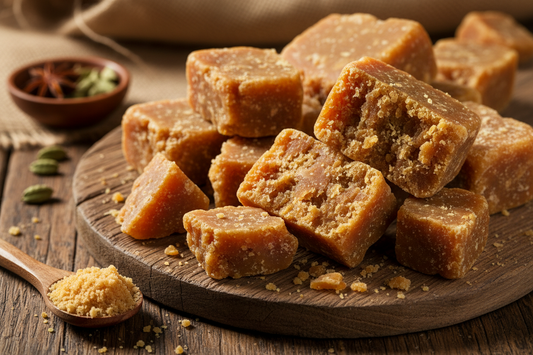
Jaggery is a traditional, unrefined sweetener made from sugarcane juice or palm sap. Popular across South Asia, Africa, and parts of Latin America, it has recently gained attention as more people look for natural alternatives to refined white sugar. But what exactly is jaggery, and how does it compare to other sweeteners?
In this guide, we’ll explore its benefits, uses, nutritional value, and answer common questions about this golden-brown ingredient.
Which is better jaggery or brown sugar?
When comparing jaggery and brown sugar, the key difference lies in processing. Brown sugar is refined white sugar with molasses added back in, while jaggery is typically less processed and retains more natural minerals.
Nutritional differences:
· Jaggery contains small amounts of iron, magnesium, potassium, and antioxidants.
· Brown sugar mainly provides sucrose with minimal micronutrients.
So, which is better jaggery or brown sugar? If you're looking for a less refined option with trace minerals, jaggery may be the better choice. However, both are still forms of sugar and should be consumed in moderation.
Buy jaggery and brown sugar from here:
· Global Choice Punjabi Shakkar
Can I eat honey and jaggery together?
Can I eat honey and jaggery together? Yes, but in moderation.
Both are natural sweeteners and both contain sugars. Combining them won’t necessarily increase health benefits but will increase sugar intake. In traditional practices, small amounts may be used together in herbal preparations. Try to use quality jaggery and honey like this one.
Is jaggery like molasses?
A common question is: Is jaggery like molasses? The answer is — somewhat.
Both jaggery and molasses are derived from sugarcane. However:
· Molasses is a byproduct of sugar refining.
· Jaggery is made by boiling sugarcane juice until it solidifies, without separating molasses.
So while they share a deep, rich flavour, they’re not identical.
What is another name for jaggery?
Jaggery is known by many names around the world. What is another name for jaggery?
· Gur (India and Pakistan)
· Panela (Latin America)
· Rapadura (Brazil)
· Muscovado (sometimes used similarly, though not identical)
In the United States, people often ask, what do Americans call jaggery? The closest common terms are panela, cane sugar blocks, or sometimes simply “unrefined cane sugar.” It’s not as mainstream in North America as white or brown sugar, but it’s becoming more available in health food stores across Canada.
Which country is famous for jaggery?
Which country is famous for jaggery? The answer is India, one of the largest producers and consumers of jaggery in the world. It is widely used in traditional sweets, savoury dishes, and Ayurvedic remedies.
Countries like Pakistan, Sri Lanka, Bangladesh, and parts of Africa also produce and consume jaggery regularly.
Is jaggery full of iron?
Many people ask: Is jaggery full of iron? Jaggery does contain iron, particularly darker varieties made in traditional iron pots. However, it is not “full” of iron in the sense that it can replace iron-rich foods like red meat, lentils, or spinach.
That said, compared to refined sugar, jaggery offers small but meaningful amounts of iron and other minerals.
Which is better jaggery or stevia?
If your goal is reducing calories or managing blood sugar, you might wonder: Which is better jaggery or stevia?
· Stevia is a zero-calorie sweetener derived from plant leaves.
· Jaggery contains calories and sugar.
For people with diabetes or those limiting sugar intake, stevia may be the better option. However, jaggery is more natural and less processed than many artificial sweeteners. The best choice depends on your dietary needs.
Are brown sugar and jaggery the same?
Are brown sugar and jaggery the same? No.
While both are brown and have a rich flavour, brown sugar is refined sugar with added molasses. Jaggery is unrefined and solid, often sold in blocks or powder form.
Their taste profiles differ as well:
· Brown sugar: milder, softer sweetness
· Jaggery: deeper, caramel-like, earthy flavour
What can I replace jaggery with?
If a recipe calls for jaggery and you don’t have it on hand, here are some options:
· Brown sugar
· Maple syrup (a Canadian favourite!)
· Molasses mixed with white sugar
· Coconut sugar
So, what is a substitute for jaggery? The best substitute depends on the recipe. For baking, brown sugar works well. For traditional dishes, molasses mixed with sugar gives a closer match.
How much sugar is equal to jaggery?
In most recipes, jaggery can be substituted 1:1 with white or brown sugar by weight. However, because jaggery has a stronger flavour and slight moisture content, you may want to adjust slightly for texture in baking.
Which time is best to eat jaggery?
Many people ask: Which time is best to eat jaggery?
Traditionally, jaggery is consumed:
· After meals to aid digestion
· In the morning with warm water
· During colder months for warmth
Some believe jaggery helps digestion and may reduce bloating after meals.
Does jaggery clean your stomach?
Does jaggery clean your stomach? While there is anecdotal belief that jaggery aids digestion, there is limited scientific evidence to confirm that it “cleans” the stomach. However, its mineral content and traditional use suggest it may support digestion when eaten in small amounts after meals.
Is jaggery good for teeth?
Is jaggery good for teeth? Despite being less refined, jaggery is still sugar. It can contribute to tooth decay if oral hygiene is poor. Brushing and flossing regularly remain essential, regardless of the sweetener you use.
What are the disadvantages of jaggery?
While jaggery has benefits, it’s not without drawbacks. What are the disadvantages of jaggery?
· High in calories
· Can spike blood sugar levels
· May contain impurities if not processed hygienically
· Overconsumption can contribute to weight gain
Like all sugars, moderation is key.