
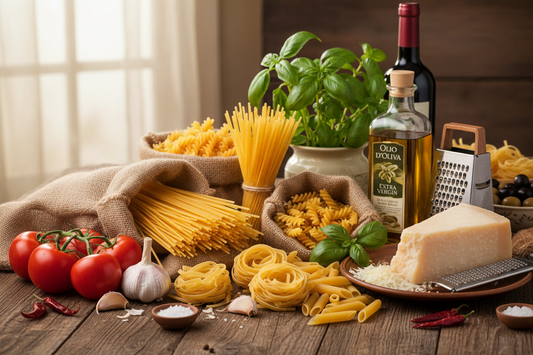
Italian food is loved around the world for its rich flavours, simple ingredients, and comforting dishes. From freshly made pasta to wood-fired pizza, Italy’s cuisine reflects centuries of culinary tradition and regional diversity. Whether you’re visiting Italy or exploring Italian cooking at home, understanding its food culture can make the experience even more enjoyable.
In this guide, we’ll explore popular dishes, dining customs, pasta varieties, and essential grocery items from Italy.
What pasta do Italians eat the most?
Many people ask what pasta do Italians eat the most or which pasta do Italians love the most.
The most frequently eaten varieties include:
· Penne
· Fusilli
· Rigatoni
These shapes hold sauces well and appear in a wide variety of traditional recipes. And these are the 4 main pastas in Italy as well.
What to bring home from an Italian grocery store?
If you visit Italy, you might wonder what to bring home from an Italian grocery store.
Some popular items include:
· Authentic Italian pasta
· Parmigiano Reggiano cheese
· Truffle products
· Italian sauces
· Regional sauces
· Artisan pasta
· Pesto from Liguria
· Italian chocolates
· Specialty coffee beans
These items allow you to recreate Italian flavours at home.
How do Italians eat so many carbs and not get fat?
One of the most common questions about Italian cuisine is: How do Italians eat so many carbs and not get fat?
Despite pasta, bread, and pizza being staples, many Italians maintain a balanced lifestyle. The key factors include:
· Portion control – Pasta servings are generally smaller compared to other parts of the world.
· High-quality ingredients – Fresh vegetables, olive oil, and minimally processed foods are common.
· Balanced meals – Pasta is often served as a primo (first course), followed by a protein-based secondo.
· Active lifestyle – Walking is a regular part of daily life in many Italian cities.
· Slow eating habits – Meals are enjoyed slowly, allowing the body to feel satisfied sooner.
These habits contribute to a healthier relationship with food.
What are the three main meals in Italy?
Understanding what the three main meals in Italy are helps explain how Italian dining works.
Colazione (Breakfast)
A light meal usually consisting of coffee or cappuccino and a pastry such as a cornetto.
Pranzo (Lunch)
Traditionally the largest meal of the day. It may include pasta, meat or fish, vegetables, and bread.
Cena (Dinner)
Dinner is often lighter than lunch but still structured with multiple courses.
Many Italians also enjoy a small afternoon snack called merenda.
What is the most popular food item in Italy?
If you’re wondering what the most popular food item in Italy, pasta and pizza compete for the top spot.
However, pasta is often considered the most iconic staple. It appears in countless regional recipes and is enjoyed almost daily in many households.
Closely following pasta in popularity are:
· Pizza
· Risotto
· Gelato
· Espresso
These foods are deeply woven into Italian culture and daily life.
What is the most eaten dish in Italy?
When asking what is the most eaten dish in Italy, pasta dishes again dominate the list.
Some of the most commonly eaten pasta dishes include:
· Spaghetti al pomodoro
· Pasta carbonara
· Lasagna
· Pasta alla bolognese
· Pasta aglio e olio
These meals rely on simple ingredients but deliver rich flavour.
What are must-try foods in Italy?
Italy offers an incredible range of dishes. If you’re visiting or exploring Italian cuisine, here are some must-try foods in Italy:
· Pizza Napoletana – Authentic wood-fired pizza from Naples
· Risotto – Creamy rice dish common in northern Italy
· Lasagna – Layered pasta with meat and béchamel sauce
· Tiramisu – Classic coffee-flavoured dessert
· Gelato – Italian-style ice cream with intense flavour
· Parmigiano Reggiano – A famous aged cheese
· Prosciutto di Parma – Thinly sliced cured ham
Each region in Italy has its own unique specialties worth exploring.
What type of pasta does Italy use?
When discussing what type of pasta does Italy use, it’s helpful to know that Italian pasta generally falls into two categories:
Fresh pasta (Pasta Fresca)
Made with eggs and flour, common in northern regions.
Dried pasta (Pasta Secca)
Made from durum wheat semolina and water, widely used across Italy.
Both types are essential to Italian cooking.
How many types of Italian pasta are there?
A common question among food lovers is how many types of Italian pasta are there.
Italy has over 350 recognised pasta shapes, and when regional variations are included, the number exceeds 600.
Each shape is designed for a specific sauce or cooking method.
What pasta is made in Italy?
If you’re shopping internationally, you might wonder what pasta is made in Italy.
Authentic Italian pasta is typically produced using:
· Durum wheat semolina
· Traditional bronze-cut shaping methods
· Slow drying processes
Many premium brands label their products with “Made in Italy” or IGP/DOP certifications to confirm authenticity.
What is white pasta called in Italian?
The term white pasta often refers to pasta served without tomato sauce.
In Italian cooking, this style is commonly known as “pasta in bianco.”
It usually includes simple ingredients such as:
· Butter or olive oil
· Parmesan cheese
· Garlic
This dish is light, comforting, and often eaten when someone wants something simple.
Is Italian pasta healthier?
Many people wonder: Is Italian pasta healthier?
Italian pasta can be healthier due to several factors:
· Made with durum wheat, which has a lower glycemic index
· Often paired with vegetables and olive oil
· Served in smaller portions
· Typically, less processed than some commercial alternatives
When eaten in moderation as part of a balanced diet, pasta can be a nutritious meal.
What are some food taboos in Italy?
Italian dining traditions include several cultural rules. Here are some food taboos in Italy:
· Adding cheese to seafood pasta is generally avoided.
· Ordering cappuccino after lunch or dinner is uncommon.
· Cutting spaghetti is considered improper.
· Overloading pizza with toppings is not traditional.
Respecting these customs helps visitors enjoy meals the Italian way.
Is it rude to cut pasta in Italy?
A frequently asked question is: Is it rude to cut pasta in Italy?
Yes, it’s generally considered improper to cut long pasta like spaghetti with a knife. Instead, Italians twirl the pasta with a fork to eat it neatly.
Learning this simple technique helps you dine like a local.
What is the pizza rule in Italy?
There’s an unwritten pizza rule in Italy that surprises many visitors.
Traditionally:
· Pizza is eaten whole, not sliced before serving.
· It’s typically one pizza per person.
· Toppings are kept simple and balanced.
Classic examples include Margherita and Marinara, which highlight quality ingredients rather than quantity.
What are the food rules in Italy?
Many locals follow a few simple principles when dining. These are often referred to as the food rules in Italy:
1. Use fresh ingredients
2. Keep recipes simple
3. Respect regional traditions
These guidelines help preserve the authenticity of Italian cuisine.