
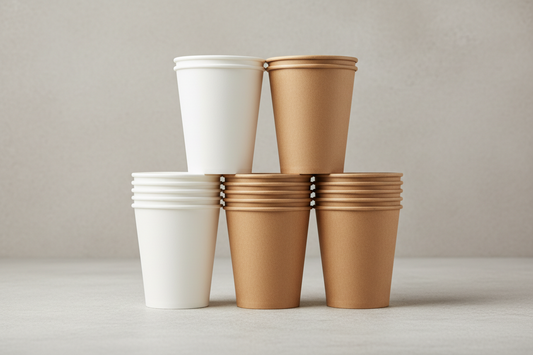
Disposable cups are a staple in homes, offices, cafés, food trucks, and events. From your morning coffee to portioned condiments and catering service, these convenient cups make food and beverage service quick and efficient. But with growing awareness around health, sustainability, and accurate measurements, many people ask important questions about cup sizes, materials, and better alternatives.
In this guide, we’ll break down common measurement questions, explore what disposable cups are made of, and help you choose the right option for your needs.
How many ml is 1 cup?
In Canada, when referring to standard metric measurements, 1 cup equals 250 ml. This is the common kitchen measurement used in Canadian recipes.
However, it’s important to note:
· Canadian metric cup: 250 ml
· U.S. customary cup: Approximately 237 ml
So if you're following a Canadian recipe, 1 cup = 250 ml. That also answers a common question:
Is 250ml a 1 cup?
Yes — in Canada, 250 ml is considered 1 cup.
This measurement is helpful when portioning beverages, soups, sauces, or even when choosing the right disposable cup size for serving.
How much is 60ml in cups?
Since 1 cup equals 250 ml, 60 ml converts to:
· 60 ml ÷ 250 ml = 0.24 cups
So 60 ml is just under ¼ cup.
In practical terms, 60 ml is commonly used for:
· Espresso shots
· Small sauce portions
· Medicine dosing
· Salad dressings
This is also where small disposable portion cups come into play — they’re often sized between 30 ml and 120 ml.
What is a normal cup size in ml?
The phrase “normal cup size” depends on context:
· Kitchen measuring cup (Canada): 250 ml
· Standard coffee cup (home mug): 250–350 ml
· Takeout coffee cup (small): 8 oz (approx. 240 ml)
· Medium takeout coffee: 12 oz (approx. 355 ml)
· Large takeout coffee: 16 oz (approx. 473 ml)
For disposable beverage service, 8 oz (about 240–250 ml) is generally considered the standard single-serve size.
Is 1 cup dry the same as 1 cup liquid?
This is one of the most common kitchen questions.
Technically, yes — 1 cup dry equals 1 cup liquid in volume. Both measure 250 ml in Canada.
However, the tools used are slightly different:
· Dry measuring cups are meant to be filled to the top and levelled off.
· Liquid measuring cups typically have a spout and extra space above the measurement line to prevent spilling.
So while the volume is the same, the design of the measuring tool differs for accuracy and ease of use.
What is the difference between a dry and liquid cup?
To expand further:
Dry Measuring Cup
· Designed for flour, sugar, rice, etc.
· Filled to the rim
· Levelled with a flat edge
Liquid Measuring Cup
· Designed for water, milk, oil, etc.
· Includes measurement lines below the rim
· Allows you to check measurement at eye level
When it comes to disposable cups, beverage cups are typically designed for liquids only — they are not meant for accurate dry measurement.
What are disposable cups made of?
Disposable cups come in several materials, each with different properties:
1. Paper Cups
· Made from paperboard
· Lined with polyethylene (plastic) or PLA (plant-based lining)
· Common for hot beverages
2. Plastic Cups
· Usually made from PET or polypropylene (PP)
· Ideal for cold drinks
· Clear and lightweight
3. Foam Cups
· Made from expanded polystyrene (EPS)
· Excellent insulation
· Increasingly restricted in many regions
4. Compostable Cups
· Made from bagasse (sugarcane fibre), PLA, or other plant-based materials
· Designed to break down in commercial composting facilities
Do coffee cups leach microplastics?
This is a growing concern.
Many paper coffee cups contain a thin plastic lining to prevent leaks. When hot liquids are added, tiny amounts of microplastics may shed from the lining — especially if the cup is exposed to heat for extended periods.
Research suggests exposure levels are generally low, but reducing single-use plastic contact is one-way consumers are minimizing risk.
If this is a concern, you might consider:
· Bringing a reusable stainless steel or glass mug
· Choosing certified compostable cups with plant-based linings
Are paper cups better than plastic cups?
The answer depends on what “better” means to you.
From an environmental perspective:
· Paper cups come from renewable resources but are often difficult to recycle due to plastic lining.
· Plastic cups are recyclable in many facilities but contribute to plastic waste if improperly disposed.
From a heat perspective:
· Paper cups handle hot drinks better.
· Plastic cups are better suited for cold beverages.
From a sustainability standpoint:
Compostable or recyclable options are generally preferred over foam.
So, are paper cups better than plastic cups?
They can be — particularly for hot beverages — but proper disposal and recycling access matter most.
What are portion cups used for?
Portion cups are small disposable containers, usually ranging from 30 ml to 120 ml.
They’re commonly used for:
· Salad dressings
· Sauces and dips
· Condiments
· Medicine doses
· Food sampling
· Catering service
In foodservice environments, portion cups help control costs and maintain consistent serving sizes.
How much is 6 cups of water?
Since 1 cup equals 250 ml in Canada:
6 cups × 250 ml = 1,500 ml
That equals 1.5 litres of water.
This is useful when calculating hydration goals or preparing recipes in bulk. For example, a large disposable beverage container might hold close to this amount.
What to use instead of disposable cups?
As sustainability becomes more important, many Canadians are looking for alternatives.
Here are practical options:
· Reusable stainless-steel tumblers
· Glass cups or mason jars
· Ceramic mugs
· Silicone collapsible travel cups
· Compostable plant-based cups
For businesses, offering incentives for customers who bring their own cups can significantly reduce waste.
What is the healthiest type of cup to drink from?
From a health standpoint, the safest and healthiest materials are:
· Stainless steel (food-grade)
· Glass
· High-quality ceramic (lead-free glaze)
These materials do not leach chemicals, even with hot beverages.
Plastic and lined paper cups are generally safe for occasional use, but reusable non-reactive materials are considered better for daily consumption.