
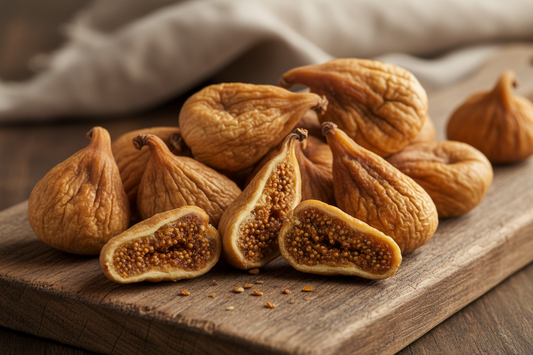
Figs are one of those fruits that can seem mysterious at first. They have a soft, delicate texture, a naturally sweet flavour and tiny edible seeds inside. Whether you enjoy fresh figs on their own, add them to breakfast or use them in desserts, they offer a unique combination of taste and nutrition.
But how do you know when a fig is ripe? Can you eat the whole fruit? And is it true that figs involve wasps? Here are answers to the most common questions about figs.
Pulled vs Lerida vs Garland
When buying dried figs, you may see Pulled, Lerida and Garland on the packaging. These names mainly describe the shape and presentation of the dried fruit.
· Pulled figs are shaped into compact, individual forms with a rounded top and flatter base. They are ideal for everyday snacking.
· Lerida figs are pressed flat and arranged into a rounded, wheel-like shape, creating a compact appearance.
· Garland figs are arranged into a round or ring-like shape, making them particularly attractive for gifting or serving.
The taste is generally similar across all three: naturally sweet, chewy and rich. The main differences are shape, presentation and packing, rather than flavour. So, choose according to the appearance and format you prefer.
What does a fig taste like?
A ripe fresh fig tastes sweet, honey-like and mildly fruity, with subtle notes that can resemble berries or jam. Its flavour varies depending on the variety and ripeness.
The texture is just as distinctive as the taste. The skin is thin and soft, while the inside is juicy, pulpy and filled with hundreds of tiny seeds that provide a slight crunch.
Fresh figs tend to be softer and more delicate than dried figs. Dried figs have a much more concentrated sweetness and a chewy texture because much of their water has been removed.
How many figs can I eat a day?
For most healthy adults, two to four fresh figs a day can be a reasonable serving as part of a balanced diet. There is no universal daily limit, however, because the ideal amount depends on your overall diet, calorie needs and tolerance to fibre and natural sugars.
Dried figs are much more concentrated than fresh ones, so a smaller serving is generally appropriate. If you're increasing your fig intake, start gradually, particularly if you aren't used to eating a lot of fibre.
Can you eat a fig raw?
Yes. Fresh figs can be eaten raw, and you can eat the entire fruit.
Simply rinse the fig, remove the stem if you don't want to eat it, and enjoy it whole. The skin, flesh and tiny seeds are all edible.
Some people prefer to peel figs, but this is generally unnecessary when the fruit has been properly washed.
What is the gross truth about figs?
The most talked-about fact about figs is their relationship with fig wasps.
Some fig varieties are pollinated by tiny female fig wasps. In these varieties, a wasp may enter the fig through a small opening and pollinate the flowers inside. In certain species, the wasp dies within the fig as part of this natural reproductive process.
However, this does not mean that every fig you buy contains a dead wasp. Many commercially grown fig varieties do not require wasp pollination and develop without it.
Even in wasp-pollinated figs, the idea of finding an intact wasp inside your fruit is misleading. Natural enzymes break down the wasp's body. So there is no need to avoid figs because of this fact.
When not to eat figs?
Avoid figs that show obvious signs of spoilage, such as mould, a sour or fermented smell, extensive leaking or an unusually slimy texture.
You should also be cautious about eating large quantities if figs consistently cause you bloating, diarrhoea or stomach discomfort. Their fibre and naturally occurring sugars can affect people differently.
If you have been advised to restrict potassium, sugar or fibre for a medical reason, speak with your healthcare professional about how figs fit into your diet.
What happens if I eat 10 figs a day?
Eating 10 fresh figs in one day is not automatically dangerous for a healthy person, but it is a fairly large serving. You would consume considerably more fibre and natural sugar than you would from a few figs.
The most likely result for some people is bloating, gas, loose stools or abdominal discomfort, particularly if their digestive system isn't accustomed to a high-fibre intake.
Ten dried figs are a different matter because dried fruit is much more concentrated. Eating that amount regularly can add a substantial amount of sugar and calories to your diet.
For everyday eating, moderation is generally more practical than treating figs as a fruit you need to consume in large quantities.
What part of a fig can you not eat?
Almost the entire fresh fig is edible. You can eat the skin, flesh and seeds.
The part most people discard is the tough stem at the top. Although it isn't necessarily dangerous in small amounts, it is woody and unpleasant to eat.
Always remove any part that looks mouldy or spoiled rather than simply cutting away a small visible patch.
Do figs make you sleepy?
Figs aren't a sleep-inducing food in the same way that a medication or sleep aid is. However, they can form part of a balanced evening snack.
Figs contain several nutrients involved in normal body function, but there isn't strong evidence that eating figs specifically will make you sleepy. If you feel tired after eating them, it may have more to do with the overall meal, time of day or your individual response than the fig itself.
Why does my tongue burn after eating figs?
A burning or tingling sensation after eating fresh figs can happen because figs contain latex and enzymes such as ficin. These compounds can irritate sensitive tissues in some people.
The irritation may be more noticeable with unripe figs, whose milky latex is more prominent. Rinsing the fruit and choosing fully ripe figs may help.
If you experience significant swelling, hives, difficulty breathing or other signs of an allergic reaction, stop eating the fruit and seek urgent medical attention.
How can you tell if a fig is ripe?
A ripe fig is generally soft to the touch without being mushy. It should have a pleasant, sweet smell and may droop slightly from its stem.
Depending on the variety, ripe figs can be green, purple, brown, red or almost black, so colour alone isn't a reliable indicator.
Avoid very hard figs if you're looking for fruit that is ready to eat. On the other hand, excessive softness, leaking liquid, mould or a fermented smell can indicate that the fig has gone past its best.
Should figs be washed before eating?
Yes. Wash fresh figs before eating them, even if you plan to peel them.
Gently rinse them under cool running water and pat them dry. Because the skin is delicate, avoid vigorous scrubbing that could damage the fruit.
Wash figs shortly before eating rather than soaking them for a long time, as excess moisture can encourage deterioration.
Are figs healthier than bananas?
Neither fruit is simply "healthier" than the other. Figs and bananas have different nutritional strengths, and both can be part of a healthy diet.
Figs provide fibre and a range of vitamins and minerals, while bananas are well known for providing potassium and carbohydrates. Fresh figs also have a relatively high water content, whereas dried figs are much more concentrated.
If you're choosing fruit for fibre, figs can be a useful option. If you want a convenient, filling source of carbohydrates and potassium, bananas are excellent too.
The best choice ultimately depends on your dietary needs, portion size and personal preference.