
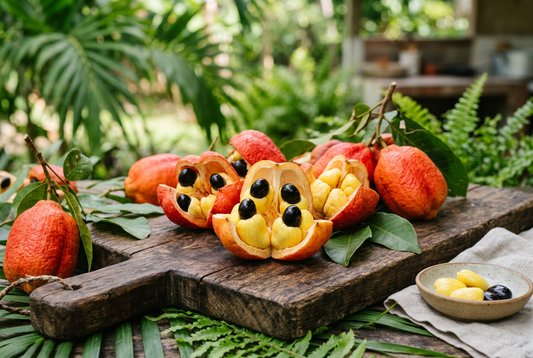
Ackee fruit is a tropical fruit best known for its role in Jamaican cuisine. With its bright red skin, creamy yellow flesh, and unique flavour, ackee is unlike most fruits you might have tried. Although it grows on trees and is classified as a fruit, it is usually prepared as a savoury dish.
Ackee is also known for its nutritional benefits and important food safety considerations. Whether you're curious about its taste, wondering how to cook it, or interested in its cultural significance, this guide covers everything you need to know.
Can You Eat Ackee Without Cooking It?
Yes, properly ripened ackee can be eaten without cooking, but doing so requires extreme caution. Ackee contains a naturally occurring toxin called hypoglycin A, which can cause severe poisoning if the fruit is unripe or improperly prepared.
When ackee ripens naturally, its outer pod splits open, revealing yellow or cream-coloured flesh called arils and shiny black seeds. Only the properly ripened, correctly cleaned arils are edible.
However, eating uncooked ackee is not recommended, especially if you're unfamiliar with identifying and preparing the fruit safely.
Cooking does not reliably make unripe ackee safe. For most people, commercially processed canned ackee from a reputable supplier is a safer and more convenient choice.
Can You Cook Ackee Without Saltfish?
Absolutely! Although ackee and saltfish is Jamaica's national dish, there are plenty of ways to enjoy ackee without fish.
Its mild flavour and creamy texture make it suitable for vegetarian and vegan recipes.
Popular alternatives include:
- Ackee and vegetables: Sauté with onions, tomatoes, bell peppers, and garlic.
- Ackee and mushrooms: Combine with mushrooms for a hearty savoury meal.
- Ackee and tofu: Prepare a protein-rich dish with seasoned tofu.
- Ackee stir-fry: Toss with vegetables and your favourite seasonings.
- Ackee on toast: Serve seasoned ackee over toasted bread for breakfast.
Ackee works particularly well with thyme, scallions, black pepper, and Scotch bonnet peppers.
Is Canned Ackee Good for You?
Yes, properly processed canned ackee can be part of a healthy, balanced diet.
Ackee contains beneficial nutrients, including:
- Healthy fats: Primarily unsaturated fats that contribute to a balanced diet.
- Fibre: Supports digestion and regular bowel movements.
- Vitamin C: Helps support immune function.
- Potassium: Contributes to normal muscle and nerve function.
- Protein: Provides a modest amount of plant-based protein.
However, nutritional values vary between products. Some canned varieties contain added salt, so checking the nutrition label is worthwhile.
Choose commercially processed ackee from a reputable manufacturer, and follow the preparation instructions on the packaging.
Why Do Jamaicans Eat Ackee?
Ackee holds an important place in Jamaican history, culture, and traditional cooking.
Originally native to West Africa, ackee was introduced to Jamaica during the 18th century. Over time, it became an essential ingredient in Jamaican cuisine.
Today, ackee and saltfish is recognised as Jamaica's national dish.
The dish typically combines cooked ackee with salted cod, onions, tomatoes, peppers, and traditional seasonings.
Jamaicans commonly enjoy it for breakfast, often accompanied by fried dumplings, boiled green bananas, breadfruit, or other traditional sides.
Beyond its flavour, ackee represents Jamaica's culinary heritage and the blending of African and Caribbean food traditions.
Why Is Ackee So Expensive?
Ackee can be relatively expensive, particularly outside regions where it grows naturally.
Several factors contribute to its price:
- Careful harvesting: Ackee must ripen naturally and open before harvesting.
- Specialized processing: Removing toxic parts requires proper handling.
- Limited availability: Fresh ackee is not widely distributed internationally.
- Import expenses: Transportation, packaging, and regulatory requirements increase costs.
- Labour-intensive preparation: Cleaning and processing the edible portions takes time.
Canned ackee often costs more than common canned fruits because of these additional production requirements.
Despite its price, many people consider its distinctive taste and versatility worth the expense.
What Happens If You Eat Ackee Raw?
Eating raw ackee is not automatically poisonous if the fruit is fully ripe and correctly prepared. However, unripe or improperly prepared ackee can cause life-threatening poisoning.
The toxin hypoglycin A interferes with the body's ability to maintain normal blood glucose levels.
Symptoms of ackee poisoning may include:
- Severe vomiting
- Abdominal discomfort
- Weakness and dizziness
- Dangerously low blood sugar
- Confusion, seizures, or unconsciousness
This condition is sometimes called Jamaican vomiting sickness.
Symptoms can develop within hours of consumption, and severe cases may result in coma or death.
If ackee poisoning is suspected, seek emergency medical attention immediately. Do not wait for symptoms to become severe.
What Does Ackee Taste Like?
Ackee has a mild, buttery, slightly nutty flavour with a soft and creamy texture.
Unlike sweet tropical fruits such as mangoes or pineapples, ackee has a savoury character.
Many people compare its texture to scrambled eggs, although its flavour is different.
When cooked, ackee becomes tender and absorbs seasonings easily.
Its delicate taste pairs beautifully with onions, peppers, garlic, herbs, and savoury ingredients.
Because it isn't particularly sweet, ackee is more commonly served in main dishes than desserts.
Is Ackee Fruit Safe to Eat?
Yes, ackee is safe when it has been properly ripened, cleaned, and prepared.
However, safety depends on following strict preparation guidelines.
Important precautions include:
- Never eat ackee from a pod that has been forced open before naturally ripening.
- Never consume ackee seeds or the pinkish-red membranes surrounding the edible flesh.
- Avoid damaged, questionable, or improperly processed fruit.
- Purchase canned ackee from reputable commercial producers.
- Follow product instructions and discard any suspicious canned products.
Remember that boiling or frying cannot reliably eliminate the toxins in unripe ackee.
If you're unfamiliar with fresh ackee preparation, commercially processed canned ackee is generally the more practical option.
What Is the Yuckiest Fruit?
The answer depends entirely on personal taste.
Some people consider durian the world's most unpleasant fruit because of its powerful smell. Others dislike bitter melon, noni fruit, or fruits with unusual textures.
Ackee occasionally surprises first-time eaters because it doesn't taste like a typical sweet fruit.
However, many people love its creamy consistency and savoury flavour.
Rather than being unpleasant, ackee is considered a delicacy in Jamaican cooking.
Personal preferences, cultural familiarity, and preparation methods all influence how enjoyable a fruit tastes.
Does Ackee Spike Your Cholesterol?
Ackee itself contains no dietary cholesterol because it is a plant-based food.
It provides fats, including unsaturated fatty acids, which can fit into a heart-conscious eating pattern.
However, this doesn't mean eating ackee automatically lowers cholesterol.
The overall nutritional impact depends on portion sizes, cooking methods, and accompanying ingredients.
For example, preparing ackee with large amounts of butter, fatty meats, or heavily salted ingredients can change the nutritional profile of the meal.
For a healthier preparation, consider using moderate amounts of vegetable oil and adding plenty of vegetables.
How to Eat Ackee?
The easiest way to enjoy ackee is to purchase commercially canned ackee that has been properly processed.
Here's a simple preparation method.
Ingredients
- 1 can of commercially processed ackee
- 1 small onion, chopped
- 1 tomato, diced
- 1 bell pepper, sliced
- 1 tablespoon vegetable oil
- 1 garlic clove, minced
- Fresh thyme
- Black pepper to taste
Instructions
- Open the canned ackee and drain it carefully, following the package directions.
- Heat vegetable oil in a frying pan over medium heat.
- Add onion, garlic, and bell pepper. Sauté until softened.
- Stir in the tomatoes and thyme.
- Gently add the ackee and heat thoroughly according to the product instructions.
- Season with black pepper and stir carefully to avoid breaking the delicate pieces.
- Serve warm with toast, rice, or traditional Jamaican side dishes.
Ackee can also be incorporated into vegetable bowls, savoury breakfast dishes, and Caribbean-inspired meals.