
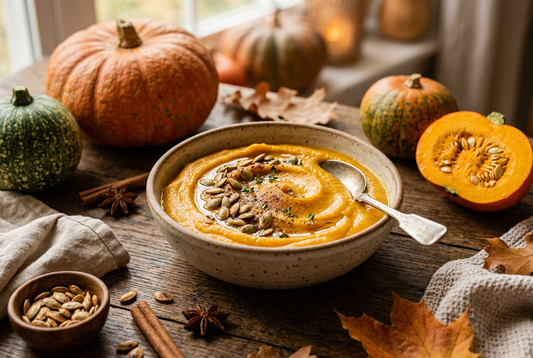
Pumpkin puree is a versatile ingredient used in everything from soups and sauces to pies, muffins, and smoothies. Its smooth texture, mild sweetness, and nutritional benefits make it a popular choice for both sweet and savoury recipes.
Whether you prefer homemade pumpkin puree or the convenience of canned pumpkin, understanding how to prepare, store, and use it can help you get the most out of this ingredient.
How Is Pumpkin Puree Made?
Pumpkin puree is made by cooking pumpkin flesh until soft and blending or mashing it into a smooth consistency. You can prepare it at home using a few simple steps.
- Choose a pumpkin: Select a sugar pumpkin or pie pumpkin, as these varieties generally have sweeter, less watery flesh.
- Wash and cut: Clean the pumpkin, slice it in half, and remove the seeds and stringy fibres.
- Cook the pumpkin: Roast it at 190°C (375°F) for approximately 45–60 minutes, or until the flesh becomes tender.
- Remove the flesh: Allow the pumpkin to cool before scooping the cooked flesh away from the skin.
- Blend until smooth: Use a food processor or blender to create a creamy puree.
If the puree contains excess moisture, strain it through cheesecloth before using it in baking.
Or for better convenience, buy a tin pack pumpkin puree instead.
Is Pumpkin Puree the Same as Just Canned Pumpkin?
Yes, plain canned pumpkin and pumpkin puree are generally interchangeable in recipes.
However, there is an important distinction between canned pumpkin and pumpkin pie filling.
Canned pumpkin puree usually contains cooked, mashed pumpkin or approved varieties of winter squash without added sugar or spices.
Pumpkin pie filling contains additional ingredients, such as sugar, cinnamon, nutmeg, and other seasonings.
Always check the ingredient label before purchasing, particularly when preparing savoury dishes or recipes requiring unsweetened puree.
Is Pumpkin Puree 100% Pumpkin?
Pure pumpkin puree typically contains just one ingredient: pumpkin.
However, some commercially canned pumpkin products may contain varieties of winter squash that are botanically related to pumpkins.
Products labelled as pure pumpkin generally contain no added sugar, preservatives, or artificial flavours, although checking the ingredients is still worthwhile.
For homemade puree, using fresh pumpkin gives you complete control over the ingredients and consistency.
Is Pumpkin Puree Good for Your Gut?
Pumpkin puree can support digestive health because it contains dietary fibre.
Fibre helps maintain regular bowel movements and supports healthy digestion. Some fibre also provides nourishment for beneficial gut bacteria.
Pumpkin contains both soluble and insoluble fibre, which contribute to digestive function in different ways.
Additionally, pumpkin provides water and nutrients that support a balanced diet.
However, pumpkin puree is not a treatment for digestive disorders. People with sensitive digestive systems should introduce fibre gradually to avoid discomfort.
What Does Pumpkin Puree Taste Like?
Pumpkin puree has a mild, earthy flavour with subtle natural sweetness. Its taste is less intense than sweet potatoes and generally less sweet than butternut squash.
The flavour depends on the pumpkin variety and cooking method.
Roasted pumpkin puree often tastes sweeter and richer because roasting concentrates its natural flavours. Boiled pumpkin typically produces a milder taste.
Its neutral flavour makes pumpkin puree suitable for both sweet and savoury recipes.
Popular additions include cinnamon, ginger, nutmeg, garlic, and black pepper.
Can I Make Pumpkin Puree by Boiling?
Yes, boiling is a simple way to prepare pumpkin puree without an oven.
Start by peeling the pumpkin and cutting it into evenly sized cubes. Place the pieces in boiling water and cook for approximately 15–20 minutes until tender.
Drain thoroughly and allow excess moisture to evaporate before blending.
Boiled pumpkin contains more moisture than roasted pumpkin, so the puree may require additional straining.
Tip: Steaming is another excellent option because it generally introduces less water into the pumpkin flesh.
Can I Eat Pumpkin Every Day?
Pumpkin can be eaten daily as part of a varied, balanced diet.
It provides several important nutrients, including:
- Vitamin A: Supports normal vision and immune function.
- Vitamin C: Contributes to immune health and collagen formation.
- Potassium: Supports normal muscle and nerve function.
- Dietary fibre: Helps maintain digestive regularity.
- Antioxidants: Including beta-carotene, which the body converts into vitamin A.
However, eating large amounts of pumpkin should not replace other vegetables.
A moderate serving of unsweetened pumpkin puree can be incorporated into meals regularly.
Can Diabetics Eat Pumpkin?
People with diabetes can generally enjoy pumpkin puree in appropriate portions.
Pumpkin contains carbohydrates, which can affect blood glucose levels, but it also provides fibre and useful nutrients.
The impact on blood sugar depends on portion size, preparation method, and the other foods eaten alongside it.
Plain pumpkin puree is usually a better choice than sweetened pumpkin pie filling or pumpkin desserts containing added sugar.
Combining pumpkin with protein, healthy fats, and other fibre-rich foods can help create a balanced meal.
Anyone managing diabetes should consider their individual carbohydrate targets and monitor how different foods affect their blood glucose.
How Long Does Pumpkin Puree Last?
The shelf life of pumpkin puree depends on how it is prepared and stored.
|
Storage method |
Recommended storage time |
|
Homemade puree in the refrigerator |
3–4 days |
|
Opened canned puree in the refrigerator |
3–4 days |
|
Frozen pumpkin puree |
3–6 months for best quality |
|
Unopened canned puree |
Until the labelled best-before date, if stored properly |
Store refrigerated puree in an airtight container at 4°C or below.
For freezing, divide puree into smaller portions using freezer-safe containers or bags.
Discard puree showing mould, unusual odours, or other signs of spoilage. Never taste questionable puree to determine whether it is safe.
Can I Replace Pumpkin Puree With Pumpkin Butter?
Pumpkin butter can replace pumpkin puree in certain recipes, but the two ingredients are not identical.
Pumpkin butter is typically made by cooking pumpkin puree with sugar, spices, and sometimes apple juice or cider until thickened.
Because pumpkin butter is sweeter and more concentrated, it may significantly change a recipe's flavour and texture.
It works well in spreads, dessert fillings, and some baked goods.
For savoury dishes or recipes requiring plain pumpkin, unsweetened pumpkin puree is generally the better option.
What Is the Closest Taste to Pumpkin?
Butternut squash is one of the closest alternatives to pumpkin.
It has a similarly earthy flavour, smooth texture, and slightly sweeter taste.
Other substitutes include:
- Acorn squash: Mild, nutty, and slightly sweet.
- Sweet potato: Sweeter and denser than pumpkin.
- Kabocha squash: Rich, creamy, and naturally sweet.
- Hubbard squash: Dense flesh with a flavour suitable for baking.
Butternut squash puree is particularly useful in soups, muffins, sauces, and pies because its texture closely resembles pumpkin puree.
Is Pumpkin Puree Raw or Cooked?
Pumpkin puree is normally made from cooked pumpkin.
Cooking softens the flesh, making it easier to blend into a smooth consistency. It also develops the flavour and improves the texture.
Commercial canned pumpkin puree is cooked during processing and is ready to eat directly from the can.
Although raw pumpkin flesh is edible, it is firmer and more difficult to puree smoothly.
For most recipes, cooked pumpkin produces better results.
Can I Eat Pumpkin for Weight Loss?
Pumpkin can be a useful addition to a weight-management diet because it is relatively low in calories and contains fibre and water.
These characteristics can help increase meal volume without adding excessive calories.
Unsweetened pumpkin puree can be added to oatmeal, soups, smoothies, and sauces.
It can also replace some higher-calorie ingredients in certain recipes, although results vary depending on the dish.
However, pumpkin alone does not cause weight loss. Sustainable weight management depends on overall eating habits, physical activity, and maintaining an appropriate calorie intake.
Avoid assuming pumpkin desserts offer the same nutritional benefits as plain puree, particularly when they contain substantial amounts of sugar or butter.