
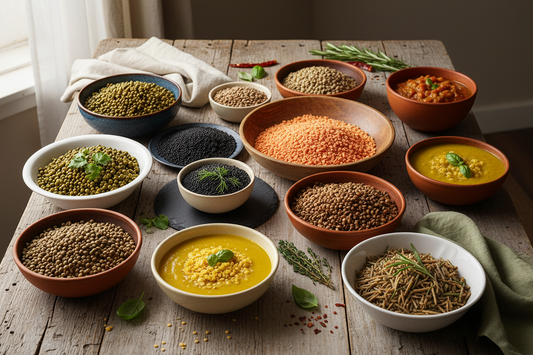
Lentils are one of the most versatile, affordable, and nutritious pantry staples you can keep on hand. Whether you’re making a hearty soup, a protein-packed salad, or a comforting curry, lentils deliver flavour, texture, and health benefits in every bite. If you’ve ever wondered how to cook them properly or which type is best, this guide answers your most common questions.
Are lentils a bean or rice?
Lentils are neither a bean nor a grain like rice. They belong to the legume family, which also includes beans, chickpeas, and peas. Unlike rice, which is a cereal grain, lentils grow in pods and are harvested as edible seeds.
They’re often grouped with beans because of their similar nutritional profile—high in plant-based protein, fibre, and essential minerals—but lentils tend to cook faster and don’t usually require soaking.
Which colour lentil is healthiest?
All lentils are nutritious, but each colour offers slightly different benefits:
· Green lentils: High in fibre and hold their shape well; great for salads
· Brown lentils: The most common variety; balanced nutrition and versatile
· Red/yellow lentils: Slightly higher in carbohydrates and softer when cooked; ideal for soups and dals
· Black lentils (beluga): Rich in antioxidants, similar to those found in dark berries
If you’re looking for maximum antioxidant content, black lentils are often considered the “healthiest.” However, the best choice ultimately depends on your recipe and dietary needs—any lentil variety is a healthy addition to your diet.
Do I need to soak lentils before cooking?
Unlike many other legumes, lentils generally do not need to be soaked before cooking. Their small size allows them to cook relatively quickly.
That said, rinsing lentils thoroughly under cold water is important to remove dust and debris. Some people choose to soak lentils for 1–2 hours to improve digestibility, but it’s optional.
What does lentil taste like?
Lentils have a mild, earthy flavour that can vary slightly depending on the type:
· Brown and green lentils: Nutty and slightly peppery
· Red and yellow lentils: Mild, slightly sweet, and creamy when cooked
· Black lentils: Rich and earthy, with a more robust taste
Their relatively neutral flavour makes lentils excellent at absorbing spices and seasonings, which is why they’re used in cuisines around the world.
How long do lentils take to cook?
Cooking time depends on the variety:
· Red lentils: 10–15 minutes
· Brown lentils: 20–30 minutes
· Green lentils: 25–35 minutes
· Black lentils: 25–30 minutes
Red lentils cook the fastest and tend to break down into a soft, almost puréed consistency, while green and black lentils hold their shape better.
What is the superstition about lentils?
In many cultures, lentils symbolize prosperity and good fortune. For example:
· In parts of Europe and South America, people eat lentils on New Year’s Day to bring wealth in the coming year.
· Their small, coin-like shape is thought to represent money and abundance.
This tradition highlights lentils not only as a nutritious food but also as a cultural symbol of hope and prosperity.
How long to cook lentils on the stove?
Cooking lentils on the stovetop is simple:
1. Rinse 1 cup of lentils.
2. Add them to a pot with 2–3 cups of water or broth.
3. Bring to a boil, then reduce to a simmer.
4. Cook uncovered, stirring occasionally.
Typical stovetop times:
· Red lentils: 10–15 minutes
· Brown/green lentils: 20–30 minutes
Check for doneness by tasting—they should be tender but not mushy (unless you’re making a soup or dal).
When should you not eat lentils?
While lentils are generally safe and healthy, there are a few situations where you might avoid or limit them:
· Undercooked lentils: Can be hard to digest and may cause discomfort
· Food sensitivities: Some people experience bloating or gas
· Kidney or digestive conditions: You may need to moderate intake due to fibre content
· Spoiled lentils: If cooked lentils smell sour or have been left out too long, discard them
Proper cooking and storage go a long way in ensuring lentils are safe to eat.
Do you soak lentils before cooking?
This is a common question—and the answer remains: soaking is optional. Lentils are unique among legumes because they cook quickly without soaking.
However, soaking may:
· Reduce cooking time slightly
· Improve digestibility for some people
If you’re short on time, you can skip this step entirely and still get great results.
What country eats the most lentils?
India is the world’s largest consumer of lentils. Lentils are a dietary staple there, commonly prepared as dal, a spiced lentil dish served with rice or flatbread.
Lentils are also widely consumed in:
· Pakistan
· Turkey
· Bangladesh
· Nepal
Their affordability and nutritional value make them especially important in plant-based and traditional diets around the globe.
Does 1 cup of dry lentils equal 2 cups cooked?
Not quite. Lentils roughly double to triple in volume when cooked.
· 1 cup dry lentils = about 2 to 2.5 cups cooked
The exact yield depends on the variety and cooking method, but this is a good general guideline for meal planning.
Do you add salt to lentils when cooking?
Yes—but timing matters.
· Adding salt too early can sometimes make lentils slightly firmer.
· For best results, add salt toward the end of cooking or once the lentils are tender.
You can also enhance flavour by cooking lentils in broth instead of water and adding aromatics like garlic, onion, or bay leaves.